We see it too often. A contractor in Perth sends off samples, gets a basic bore log back, and assumes a 'clay' is a 'clay'. Months later, the slab shows distress cracking because the soil's shrink-swell potential was never quantified. That guesswork costs money. Atterberg limits testing — liquid limit, plastic limit, and plasticity index — gives you a number that predicts exactly how that soil will behave when the Swan Coastal Plain gets its winter soaking or a dry summer bakes the moisture out. Without these numbers, you're designing on assumptions. We run the full suite per AS 1726 in our NATA-accredited lab, and we've seen enough Perth samples to know the difference between a reactive Guildford clay and a sandy Bassendean silt before the report hits your inbox. For deep investigations we also pair this with CPT testing to cross-check stratigraphy against mechanical response.
A plasticity index above 20% in Perth basin clays means your footing design just got a lot more expensive — and it's better to know that before the pour.
Approach and scope
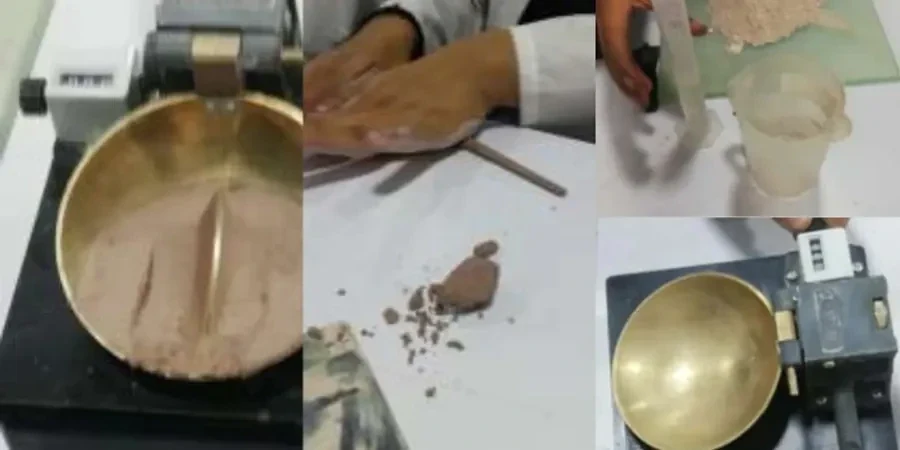
- Liquid limit determination by Casagrande cup method
- Plastic limit by thread-rolling per Australian Standard
- Plasticity index and liquidity index calculation
- Shrinkage limit testing available on request
- Sample preparation including wet sieving for coarse fraction correction
Local geotechnical context
A six-storey mixed-use development on William Street in Northbridge hit a two-metre band of dark grey estuarine clay at four metres depth. The bore logs noted 'clay of medium plasticity', but no Atterberg testing had been done on that specific layer. The structural engineer sized pad footings assuming a PI of 12%. Post-excavation sampling showed a PI of 38%. The result was a frantic redesign, deeper footings, and a two-week delay waiting for the revised structural drawings — all because a $120 test wasn't run early enough. On the coastal side of Perth, where dunes meet wetland deposits, these transitions are the rule, not the exception. Liquidity index calculations become essential too: a sample sitting near its liquid limit in winter has negligible bearing capacity. We've excavated footings in Osborne Park where the soil slumped under its own weight within minutes of the pit being opened. That's a safety issue as much as a design one.
Relevant standards
AS 1289.3.1.1:2009 — Liquid limit (Casagrande method), AS 1289.3.2.1:2009 — Plastic limit, AS 1726:2017 — Geotechnical site investigations, AS 2870:2011 — Residential slabs and footings (reactive site classification), AS/NZS 2890.1:2004 — Parking facilities (subgrade requirements)
Related technical services
Reactive Soil Classification Package
Combines Atterberg limits with shrink-swell index and particle size distribution per AS 2870 for site classification. Essential for residential slab design in Perth's reactive clay zones.
Forensic and Construction QA Testing
Rapid turnaround Atterberg testing for construction-phase verification, dispute resolution, or investigation of pavement failures where subgrade moisture sensitivity is suspected.
Typical parameters
Top questions
What does the Atterberg limits test actually measure?
Four states of consistency in fine-grained soils. The liquid limit is the moisture content where the soil transitions from plastic to liquid behaviour — measured by the Casagrande cup method where we count the blows to close a standard groove. The plastic limit is the moisture content where the soil stops behaving plastically and crumbles when rolled into 3 mm threads. The plasticity index is simply liquid limit minus plastic limit, and it tells you how wide that plastic range is. A high PI means the soil stays workable over a wide moisture range but also means it shrinks and swells dramatically.
How much does Atterberg limits testing cost in Perth?
Standard Atterberg limits testing (liquid limit plus plastic limit) runs between AU$100 and AU$140 per sample depending on whether you need the full four-point Casagrande or a single-point verification. Rush analysis and weekend processing are available at additional cost. The price includes sample preparation, oven moisture content determination, and a signed report with the plasticity chart.
How long does it take to get results from Perth samples?
Standard turnaround is three to five working days. That timing accounts for sample drying, sieving through the 425-micron sieve, the liquid limit test itself (which requires careful moisture adjustment across four points), and the plastic limit determination. We offer a 48-hour express service for construction-phase hold points where the next concrete pour depends on the result.