Ground improvement in Perth represents a critical branch of geotechnical engineering focused on enhancing the engineering properties of soils to meet the demands of modern construction. This category encompasses a range of techniques designed to increase bearing capacity, reduce settlement, mitigate liquefaction potential, and accelerate consolidation in problematic ground conditions. In a city experiencing rapid urban expansion along the Swan Coastal Plain and into the Darling Scarp foothills, the need for reliable ground improvement has never been more pressing. From high-rise developments in the CBD to infrastructure corridors and residential subdivisions, the ability to transform weak or variable soils into competent founding strata underpins the feasibility and safety of countless projects.
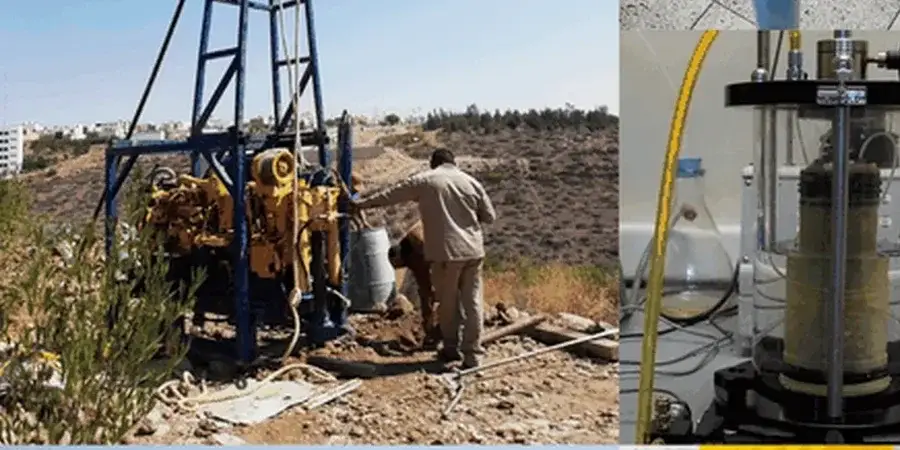
Perth's geological setting presents unique challenges that make ground improvement an essential consideration for developers and engineers alike. Much of the metropolitan area sits on Quaternary deposits including the Bassendean Sand, Guildford Clay, and alluvial sediments associated with the Swan and Canning River systems. These materials can exhibit low density, high compressibility, and in some locations, loose saturated sands that are susceptible to liquefaction under seismic loading. The Tamala Limestone formations along the coastal fringe introduce further complexity with potential karstic features and variable rockhead depths. Understanding these local ground conditions is fundamental to selecting appropriate improvement methods, and practitioners typically rely on comprehensive site investigations aligned with AS 1726 to characterise subsurface profiles before recommending a treatment strategy.
The regulatory framework governing ground improvement in Australia is robust, with several key standards directly applicable to design and execution. AS 4678 provides guidance on earth-retaining structures, while AS 5100.3 addresses bridge foundations where improved ground is often specified. For seismic considerations, AS 1170.4 defines earthquake actions relevant to Perth's moderate seismicity, and engineers must evaluate liquefaction risk in accordance with the guidelines published by the Australian Geomechanics Society. Additionally, the National Construction Code references these standards and imposes performance requirements that ground improvement designs must satisfy. Compliance with these documents ensures that treated ground meets serviceability and ultimate limit state criteria, protecting both public safety and asset longevity.
The types of projects requiring ground improvement in Perth span the full spectrum of civil and building works. Large commercial towers in the city centre frequently encounter layers of compressible alluvium overlying the Kings Park Formation, necessitating deep ground treatment to control total and differential settlement. Transport infrastructure including the METRONET expansion relies on improved ground for embankment stability and to prevent excessive deformation beneath rail alignments. Industrial facilities, particularly those with heavily loaded slabs or vibration-sensitive equipment, benefit from techniques like vibrocompaction to densify granular fills. Meanwhile, structures on soft cohesive soils may require stone column design to provide reinforcement and drainage paths, accelerating consolidation and enhancing bearing performance. Even residential land development on reclaimed or low-lying sites increasingly incorporates ground improvement to mitigate the long-term risks of differential settlement.
Available services
Common questions
What is ground improvement and why is it necessary in Perth?
Ground improvement refers to engineered techniques that modify soil properties to increase strength, reduce compressibility, or mitigate liquefaction. In Perth, it is necessary due to widespread deposits of loose sands, soft clays, and variable alluvial sediments along the Swan Coastal Plain that cannot reliably support structural loads without treatment, making it essential for safe foundation design.
Which Australian standards apply to ground improvement design?
Key standards include AS 4678 for earth-retaining structures, AS 5100.3 for bridge foundations, AS 1170.4 for seismic actions, and AS 1726 for site investigations. The National Construction Code also imposes performance requirements, while Australian Geomechanics Society guidelines inform liquefaction assessment and ground treatment verification procedures.
How do I know which ground improvement method is right for my project?
The selection depends on soil type, depth of problematic strata, structural loads, and performance criteria. Granular soils often suit densification methods, while cohesive soils may require reinforcement or preloading. A comprehensive geotechnical investigation and an experienced specialist's assessment are essential to match the technique to site-specific conditions and project objectives.
What are the typical ground conditions in Perth that require improvement?
Perth's geology features Bassendean Sand, Guildford Clay, alluvial deposits, and Tamala Limestone. Problematic conditions include loose saturated sands prone to liquefaction, compressible clays causing excessive settlement, and variable rockhead with karstic features. These conditions are common across the metropolitan area and drive the need for ground improvement.