Road geotechnics in Perth forms the critical foundation of every transport infrastructure project, from suburban residential streets to major arterial highways. This specialised discipline combines principles of soil mechanics, geology, and pavement engineering to ensure that roads are built on stable, durable, and well-drained ground. In a city experiencing rapid expansion along the Swan Coastal Plain and into the Darling Scarp, understanding the behaviour of local soils under traffic loading is essential. Without rigorous geotechnical investigation and design, pavements risk premature failure through rutting, cracking, or loss of subgrade support, leading to costly maintenance and safety hazards.
Perth's unique geological setting presents distinct challenges that demand expert attention. Much of the metropolitan area sits on deep, poorly consolidated sands of the Bassendean and Spearwood dune systems, which offer excellent drainage but can lack the stiffness required for heavy traffic. In contrast, the eastern suburbs and hills areas feature expansive clays and weathered rock profiles that are highly reactive to seasonal moisture changes. A thorough CBR study for road design is therefore indispensable for quantifying subgrade strength and predicting how these variable materials will perform under repeated loading. The proximity to the Darling Fault and areas of shallow groundwater further emphasises the need for site-specific geotechnical assessment rather than relying on generic assumptions.
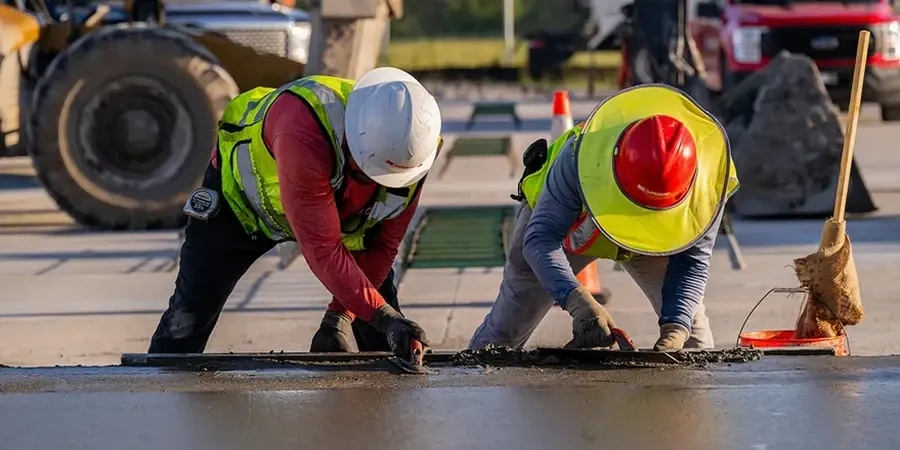
Australian standards and local guidelines govern all aspects of road geotechnics in Western Australia. Main Roads WA specifications, particularly those within the Guide to Road Design and the Supplement to Austroads Guide to Pavement Technology, set out the minimum requirements for earthworks, compaction, and pavement materials. The overarching framework of Austroads provides the national methodology, but local adoption in Perth must account for regionally available aggregates and the prevalence of sandy subgrades. Compliance with these documents ensures that designs meet the performance criteria for both flexible pavement design and rigid pavement design, balancing structural capacity with the realities of the local material supply chain and environmental conditions.
The types of projects requiring road geotechnical expertise in Perth are exceptionally diverse. Major infrastructure such as the Mitchell Freeway extension, Tonkin Highway upgrades, and the METRONET level crossing removals all demand comprehensive earthworks strategies and pavement foundation analysis. At the same time, residential subdivisions in growth corridors like Alkimos, Byford, and Piara Waters require careful handling of cut-to-fill transitions and sand subgrade improvement. Commercial and industrial developments, including mine access roads and port logistics areas, present their own challenges with exceptionally heavy axle loads and aggressive duty cycles. Every project, regardless of scale, benefits from a geotechnical investigation that informs the selection between a granular flexible build-up or a more rigid concrete solution.
Common questions
What is road geotechnics and why is it essential before pavement design?
Road geotechnics is the study of soil and rock behaviour beneath pavements, focusing on subgrade strength, drainage, and compaction. It is essential because the subgrade is the natural foundation for any road; without evaluating its bearing capacity and moisture sensitivity through testing like CBR, any pavement design risks structural failure, excessive deformation, or water damage under traffic loads.
How do Perth's sandy soils influence road construction methods?
Perth's widespread sandy soils, particularly the Bassendean sands, drain well but often lack stiffness and can be prone to erosion. Road construction typically requires mechanical stabilisation, thicker granular layers, or chemical binders to improve load distribution. Compaction moisture control is critical, and designs must account for the low fine content that reduces cohesion in unbound layers.
Which Australian standards apply to road geotechnical investigations in WA?
Investigations follow the Austroads Guide to Pavement Technology and Main Roads Western Australia's specific supplements and specifications. Key documents include the WA supplement to Austroads for subgrade evaluation, MRWA Specification 201 for earthworks, and AS 1289 series for laboratory testing methods. These ensure designs meet regional requirements for materials, drainage, and structural performance.
What are the common signs of geotechnical failure in local roads?
Common indicators include longitudinal cracking along wheel paths, excessive rutting, potholing after rain, and edge breakaway. These often point to inadequate subgrade strength, poor drainage causing saturation, or reactive clay shrinkage and swelling. In Perth, seasonal cracking in eastern suburbs often signals insufficient consideration of expansive clay behaviour during the design phase.