Slope engineering in Perth encompasses the assessment, design, and stabilisation of natural and constructed inclines to ensure long-term safety and compliance. The category covers everything from initial slope stability analysis to the implementation of retention systems and ground reinforcement. Given Perth's unique landscape, which transitions from coastal limestone ridges to deeply weathered lateritic profiles and colluvial deposits along the Swan River and Darling Scarp, managing slope risks is critical for protecting infrastructure, property, and lives. This discipline integrates geotechnical investigation with structural design to address both temporary construction conditions and permanent works, particularly in areas prone to erosion, groundwater fluctuation, and seasonal cracking clays.
Perth's geological setting presents distinct challenges for slope engineering. The Tamala Limestone, prevalent in coastal suburbs, is a weak, porous calcarenite susceptible to solution weathering and collapse, often forming steep but unstable cliffs. Further inland, the Guildford and Yoganup formations introduce highly reactive clays and loose sands that lose significant strength when saturated, a common issue during winter rainfall. The Darling Fault escarpment creates naturally steep gradients with complex rockfall hazards and deep-seated landslide potential in weathered granite and lateritic duricrust. These conditions demand a thorough understanding of local hydrogeology, as elevated groundwater tables and artesian pressures are frequent drivers of instability, requiring detailed subsurface investigation before any design work begins.
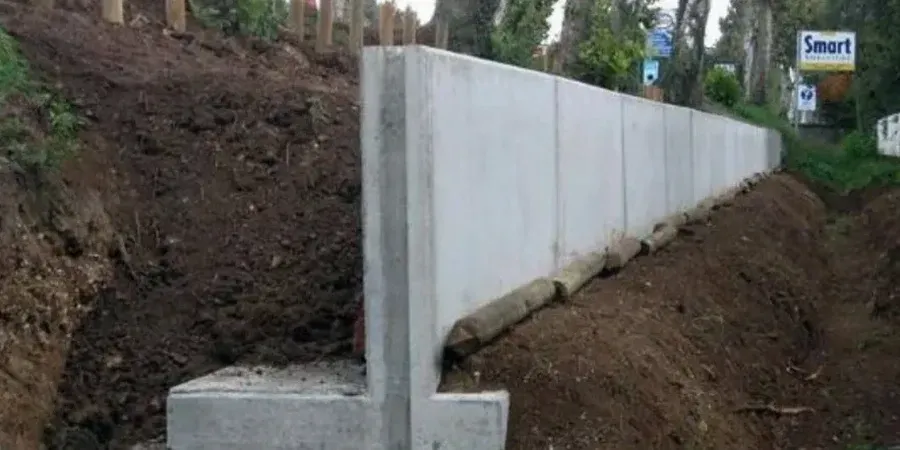
All slope works in Perth must align with Australian Standards, principally AS 4678-2002 for earth-retaining structures, which sets out design loads, durability requirements, and material specifications. For slope stability, practitioners follow guidelines from the Australian Geomechanics Society's Landslide Risk Management framework, alongside AS 1726 for site investigations and AS 5100.3 for bridge and major culvert foundations adjacent to slopes. Local councils and the Western Australian Planning Commission may impose additional requirements, particularly in designated landslide hazard areas or within the Swan Coastal Plain development zone. Compliance with these standards ensures that designs account for seismic loading per AS 1170.4, construction dewatering effects, and long-term erosion control, forming the backbone of any legally defensible and insurable engineering solution.
Projects requiring slope engineering services range from residential subdivisions on sloping blocks to major transport corridors like the Perth to Bunbury Highway and rail cuttings through the Darling Range. Developers constructing multi-storey basements in the CBD regularly engage specialists for retaining wall design to manage deep excavations in variable ground, while hillside homes often need active/passive anchor design to restrain failing embankments without encroaching on neighbouring properties. Mining infrastructure, tailings dams, and coastal protection works against dune erosion also fall under this category. Even landscaping on commercial estates can trigger the need for a slope assessment if cut-and-fill operations alter natural drainage patterns, demonstrating how pervasive slope considerations are across Perth's built environment.
Common questions
What are the main factors causing slope instability in Perth's soils?
The primary triggers include saturation of weak, porous Tamala Limestone and reactive clays during winter rains, erosion at the toe of slopes, uncontrolled surface water runoff, and construction activities that steepen or surcharge existing inclines. Groundwater level fluctuations and the presence of loose, saturated sands in the Swan Coastal Plain also significantly reduce soil strength, leading to slumps and rotational failures.
When is a slope stability analysis required for a development application in Perth?
A slope stability analysis is typically required when a proposed structure is within a zone of influence of an existing slope greater than 1:5 grade, or when excavation or filling creates a slope over 1.5 metres high. Local councils often mandate this assessment for properties in designated landslide hazard areas, near the Darling Scarp, or where historical instability has been documented.
What is the difference between active and passive anchors for slope reinforcement?
Active anchors are tensioned during installation to immediately apply a compressive load to the slope face, actively resisting movement, and are ideal for arresting ongoing deformation. Passive anchors, such as fully grouted soil nails, are installed without tension and only engage when the ground begins to move, making them suitable for general reinforcement of cuts or new excavations where some deformation is acceptable.
What retaining wall types are most suitable for Perth's sandy and limestone soils?
Cantilever reinforced concrete walls and gravity block walls perform well in sandy soils, while contiguous bored pile walls or secant pile walls are preferred in weak limestone and areas with high groundwater. For deep excavations in the CBD, anchored shotcrete or soldier pile walls are common. The selection depends on soil aggressivity, temporary versus permanent conditions, and proximity to adjacent structures.