In-situ testing forms the backbone of geotechnical site investigation across Perth, encompassing a suite of field-based methods that evaluate soil and rock properties directly in their natural state without disturbing the sample through extraction or transport. This category covers everything from strength and density assessments to permeability and deformation measurements, delivering real-time data that laboratory tests simply cannot replicate. In a city experiencing rapid urban expansion along the Swan Coastal Plain and into the Darling Scarp foothills, understanding ground conditions on site is critical for managing the risks posed by variable sand deposits, reactive clays, and shallow groundwater tables. In-situ testing provides the immediate, location-specific insights engineers need to design foundations, pavements, retaining structures, and earthworks that perform reliably over decades.
Perth's geological setting demands a rigorous approach to field testing. Much of the metropolitan area sits on the Bassendean and Spearwood dune systems, where poorly graded sands can exhibit collapse potential or liquefaction susceptibility under seismic loading. Moving east towards the scarp, residual soils derived from weathered granite and lateritic duricrust introduce heterogeneity that can confound conventional sampling. In-situ methods such as cone penetration testing, standard penetration testing, and the field density test (sand cone method) are indispensable for characterising these materials. The sand cone method, for instance, remains the benchmark for verifying compaction in sandy fills and road base layers, ensuring that engineered earthworks meet the specified relative density or dry density ratio required by project specifications.
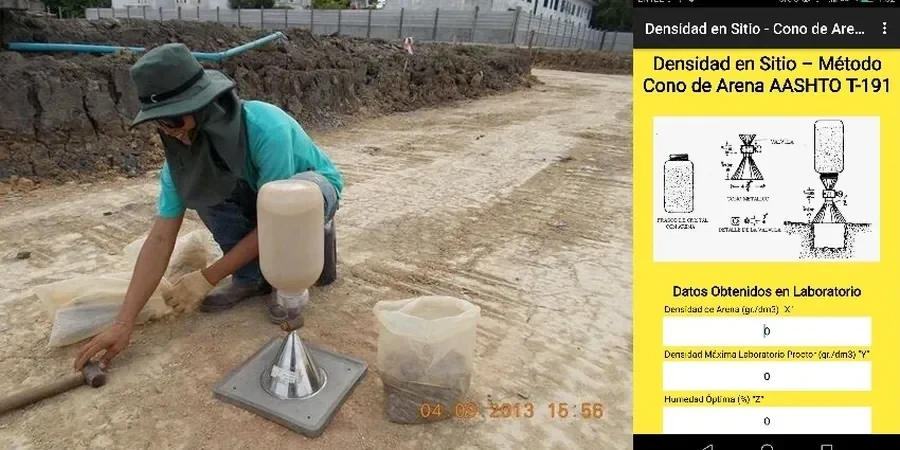
Australian Standards govern virtually all in-situ testing conducted in Perth. AS 1289 sets out the methods for soil testing, with Part 5.4.1 detailing the sand replacement method for field density determination, while AS 1726 provides the overarching framework for geotechnical site investigations. Practitioners must also adhere to AS 3798 for earthworks compliance and AS 2159 for piling design and installation, both of which rely heavily on in-situ test data. Main Roads Western Australia supplements these with its own specifications, particularly for transport infrastructure projects where proof rolling, plate load testing, and nuclear gauge density measurements are routinely specified. Understanding this regulatory landscape is essential for delivering defensible, compliant results that withstand scrutiny from principal contractors and regulatory bodies.
The breadth of projects requiring in-situ testing in Perth is extensive. Residential subdivisions in growth corridors like Alkimos, Byford, and Piara Waters demand compaction verification through field density testing to satisfy council and developer requirements. Commercial and industrial developments in areas such as the Kewdale-Welshpool industrial zone often require plate load tests to confirm bearing capacity and settlement characteristics of engineered fill. Major infrastructure projects, including the METRONET rail expansion and freeway upgrades, leverage seismic cone penetration testing to assess liquefaction potential and inform deep foundation design. Even smaller-scale retaining wall and pavement projects benefit from dynamic cone penetrometer testing to quickly profile subgrade strength. Each application underscores the value of obtaining reliable, site-specific data before construction begins.
Available services
Common questions
What is in-situ testing and why is it preferred over laboratory testing for some Perth projects?
In-situ testing evaluates soil or rock properties directly in the ground without removing samples, preserving natural stress states, moisture conditions, and fabric that are often altered during sampling and transport. In Perth's sandy soils, which can easily disturb, methods like cone penetration testing provide continuous profiles of strength and stratigraphy that laboratory tests on reconstituted samples cannot replicate, making field testing essential for reliable design parameters.
Which Australian Standards govern in-situ testing for geotechnical investigations in Perth?
AS 1289 series covers most soil test methods, with Part 5.4.1 specifying the sand replacement method for field density. AS 1726 outlines geotechnical site investigation requirements, while AS 3798 governs earthworks compliance. For piling, AS 2159 relies on in-situ data. Main Roads WA specifications often supplement these for transport projects, ensuring tests meet local infrastructure standards.
How does Perth's geology influence the choice of in-situ testing methods?
Perth's Swan Coastal Plain features deep sand deposits prone to collapse and liquefaction, demanding penetration testing for density and strength profiling. The Darling Scarp's weathered granite and laterite require methods that handle gravels and variable weathering. High groundwater tables across much of the metro area necessitate testing that accounts for pore pressure effects, influencing method selection and interpretation.
When is field density testing required during earthworks construction in Perth?
Field density testing is mandated during compaction of structural fill, road subbase, and sand pads to verify compliance with specified density ratios. Residential subdivisions, commercial building platforms, and infrastructure embankments all require regular testing at nominated lift intervals. Councils and Main Roads WA typically specify minimum frequencies based on fill volume and area to ensure uniform compaction quality.